

It is always the car park that makes it worse. Not the battery. The car park. Late, the shop shut, the lights at the far end of the row gone out. You turn the key and the dashboard does not wake up. No chime, no glow. Just the sense that the car has made a decision without you.
Then comes the clicking, or nothing at all.
Most flat batteries are not dramatic. The car sat for a week. A courtesy light was left on. The temperature dropped and a tired battery gave up. None of that is a crisis. It is a flat battery, and a flat battery is a problem you can work through yourself, once you know the order to do things in.
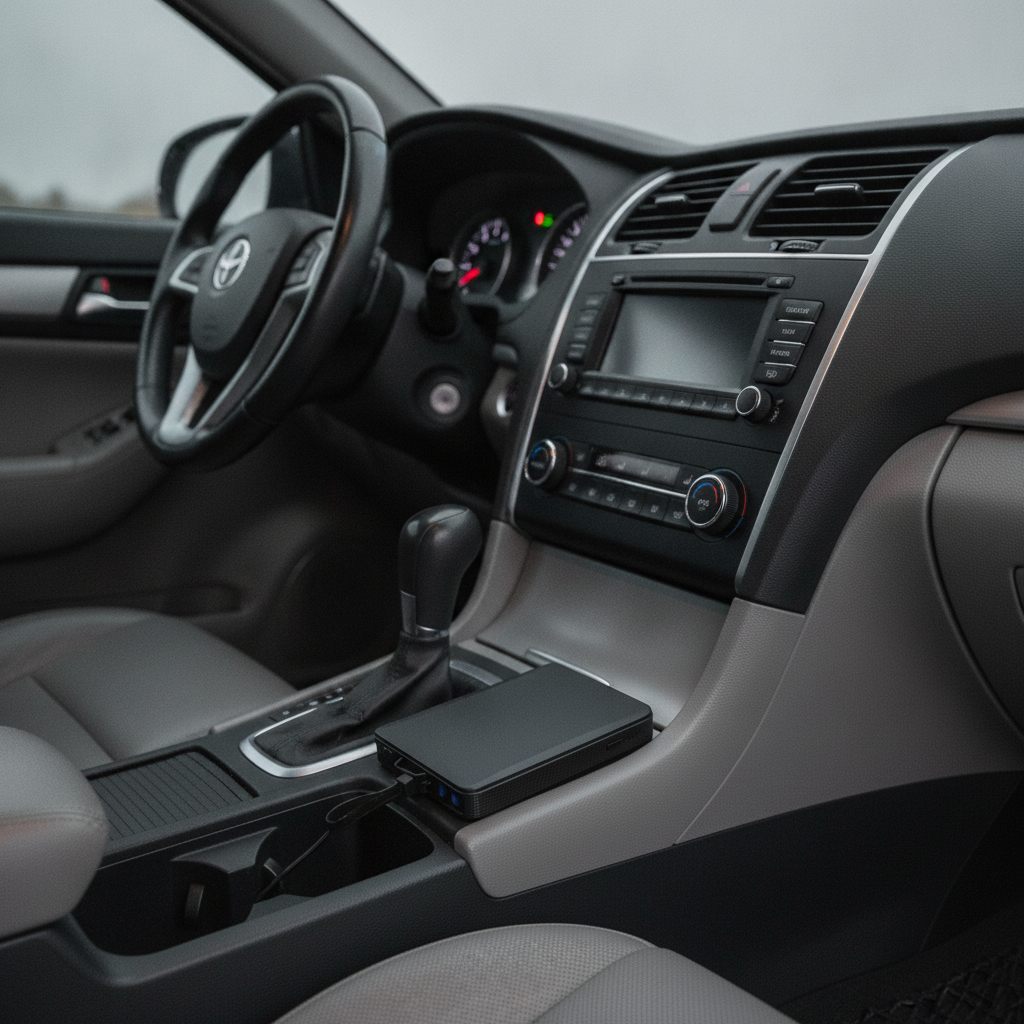
Check before you touch anything
Look at the dashboard first. If it comes on dimly, or the lights dip when you turn the key, the battery has some charge left and the trouble may be in the connection. If nothing lights at all, the battery is probably empty.
Look at the terminals. A white or greenish crust on the posts means poor contact. Loose clamps stop current getting through even when the battery itself is fine. Try to move each clamp by hand. If it turns or lifts, tighten it with the right tool and try again before anything else.
Check the owner's manual. It shows where the battery sits, which may be under a cover, under a seat, or in the boot, and which post is positive and which is negative. Red and black markings are common, but the manual is the reference. Any figures you need, such as the battery specification, are printed on the battery label or in the manual. Do not guess at them.
Switch off everything you can: lights, heater, radio, anything that draws power. Put the car in park or neutral and leave the key where it was.
Without a second car
The old answer was a second vehicle nosed up alongside, a set of cables, and a favour from somebody who was also trying to get home. That still works. It is not always available.
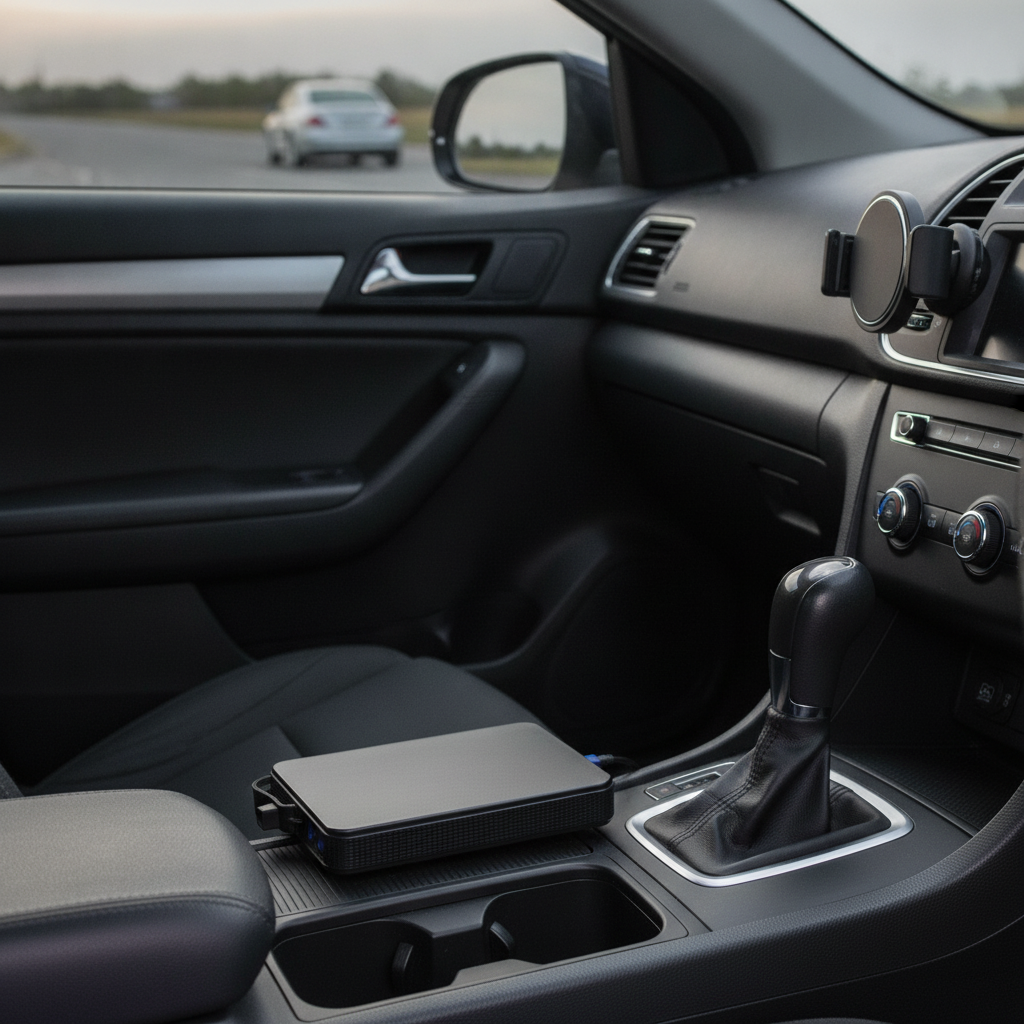
This is where a portable starter earns its place. A 20000mAh power bank designed for use as a car battery starter can be connected to the flat battery without a second vehicle. Portable Mini Slim Car Battery Starter 20000mAh Power Bank is built for that job. It is slim and compact, which makes it easy to store and carry, and it is sold as a single pack.
Follow the instructions that come with it, not a memory of someone else's method. Connect the leads in the order the manufacturer shows. Keep the clamps away from moving parts and away from each other. Keep loose sleeves and jewellery out of the engine bay. If anything smells hot or looks wrong, stop and disconnect.
Then turn the key. With luck the dashboard lights up, the engine catches, and you are back in the same car in the same spot with the problem gone for now.
After the car starts
Do not switch off straight away. Drive for a while. A battery that has been flat needs charging, and idling in the car park does not do much of that. Note what happened: the light left on, the cold night, the battery that was already old. If it happens again, have the battery tested. Most parts shops will do it while you wait, and it costs less than a tow.
Keep it in the car
Everything above is easier if the starter is already in the car. Most people do not own one because they buy it on the morning they need it, which is also the morning the shops are shut.
Put it where you will remember it. A door pocket, a glovebox, or under a seat, wherever your car has room. Keep the leads with it. Check it when the seasons change, or when you happen to think of it.
A dead battery is not a reason to stand in a dark car park waiting for someone to answer their phone. Buy it before the morning you need it. Open the Portable Mini Slim Car Battery Starter 20000mAh Power Bank page and put one in the car today. If you want to see what else is in the range, car care accessories is the place to start.